When I was seven, my second-grade teacher, Miss Leonard, used to say it at me across the classroom. Out of the side of her mouth, in a nasally, obnoxious little sing-song: Earth to Tom. She wasn't being kind about it. She was annoyed, the way you get with a kid who keeps drifting off. I'm forty-one now. I can't tell you what we had for dinner last Tuesday. But I can hear Miss Leonard like she's standing behind me, sneering it.
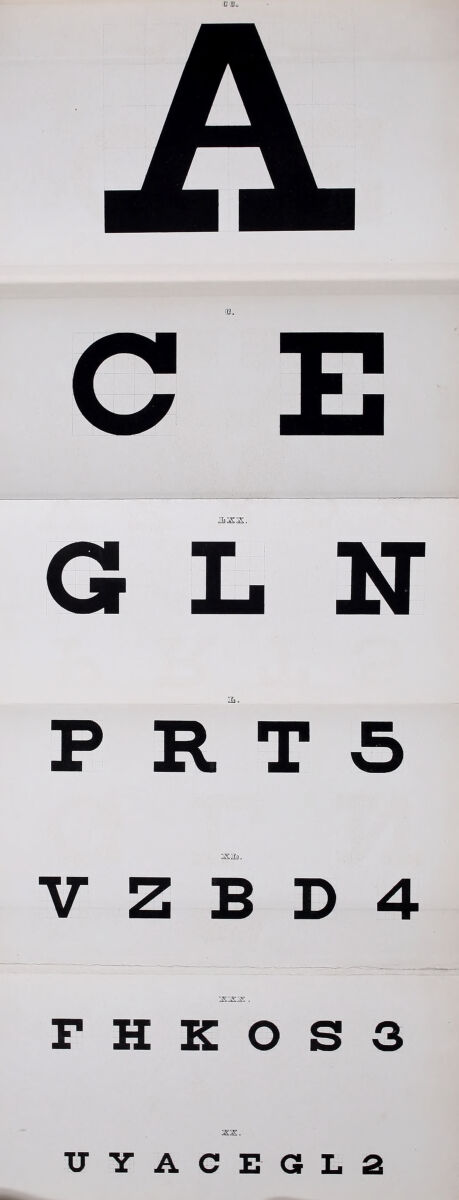
What she didn't know, and what I didn't have the words to tell her, was that I wasn't daydreaming. I was nearsighted and didn't have glasses yet. What I remember of that room now is mostly color. Green carpet. A black chalkboard. Cream-painted cinderblock walls. Our weekly jobs were posted on the back wall, over a carpeted reading corner, and to get close enough to read mine I had to step onto the carpet, which meant taking my shoes off first. Standing there in my socks, squinting at a list everyone else could read from their desks, is when I realized my eyes were failing me.
I couldn't see what was going on, so I wasn't following it, and the one voice that cut through the blur belonged to a woman who sounded a little disgusted with me. I couldn't explain. I couldn't defend myself. So it stuck. I think it stuck because it was unfair. Thirty-four years later it's still one of the voices in my head, checking whether I'm paying enough attention, whether I'm present enough, whether I'm enough.
Nobody tells you this part: the people who move into your head and stay aren't only the ones you love. You'd assume the voices you carry are the ones you picked, your parents, your mentors, your friends. The careless ones get in too, and sometimes they get in deeper. A woman having a bad morning in 1992 has more square footage in my head than people who spent years being kind to me.
I want to explain how that happens. The explanation runs through a lot of the strangest stuff we've learned about the human mind, and it ends somewhere I didn't expect, with grief, and with why people sing together.
First we have to take the self apart.
I. You are not who you think you are
Start with something you can try yourself. Close your eyes in the dark, press gently on your eyelids, and you'll see shapes. Spirals, grids, lattices, tunnels. People on psilocybin see the same ones, and so do people in migraines, deep trance and near-death experiences. The psychologist Heinrich Klüver catalogued them in the 1920s and called them form constants. They don't come from the outside world. They come from the wiring of your visual system. When neurons in your visual cortex fire on their own, they tend to fire in orderly stripes, and because the map between your eye and your cortex is warped, those straight stripes show up in your experience as spirals and funnels (Bressloff et al., 2001). You're seeing the shape of your own seeing. The oldest cave art in the world is full of the same spirals and zigzags, so people have apparently been drawing the inside of their own heads for about forty thousand years.
You're also living slightly in the past. Signals from your eyes, ears and skin reach the brain at different speeds, but you experience one smooth moment. The brain manages that by waiting for the slow signals, assembling everything into a tidy package, and handing it to you a fraction of a second late, as if it were live. The neuroscientist David Eagleman has spent much of his career on this. One trick called the cutaneous rabbit, where a quick series of taps on the arm feels like something hopping up your skin, shows the brain placing a sensation somewhere before the tap that caused it (Geldard & Sherrick, 1972). It rewrites the timeline backward to keep the story clean. Your now is a cut, not a feed.
Memory is worse. It feels like a recording, but every time you pull a memory up, it becomes editable for a while, and then the brain saves it again with whatever got mixed in while you were remembering. That's called reconsolidation. The memories you revisit most are the ones you've rewritten most. Elizabeth Loftus showed you can plant a completely invented childhood memory in an adult (in her best-known study, getting lost in a shopping mall) and watch them fill it in with the smell of the place, the panic, the nice old lady who helped (Loftus & Pickrell, 1995). Afterward some of them wouldn't believe it was fake. From the inside, a real memory and a planted one feel the same.
Then there's the split-brain research, which is the one that got me. I was washing dishes when I first heard it laid out, and I stopped washing them for a while. I stood there at the sink and said, out loud, to nobody, "that's fucking cool."
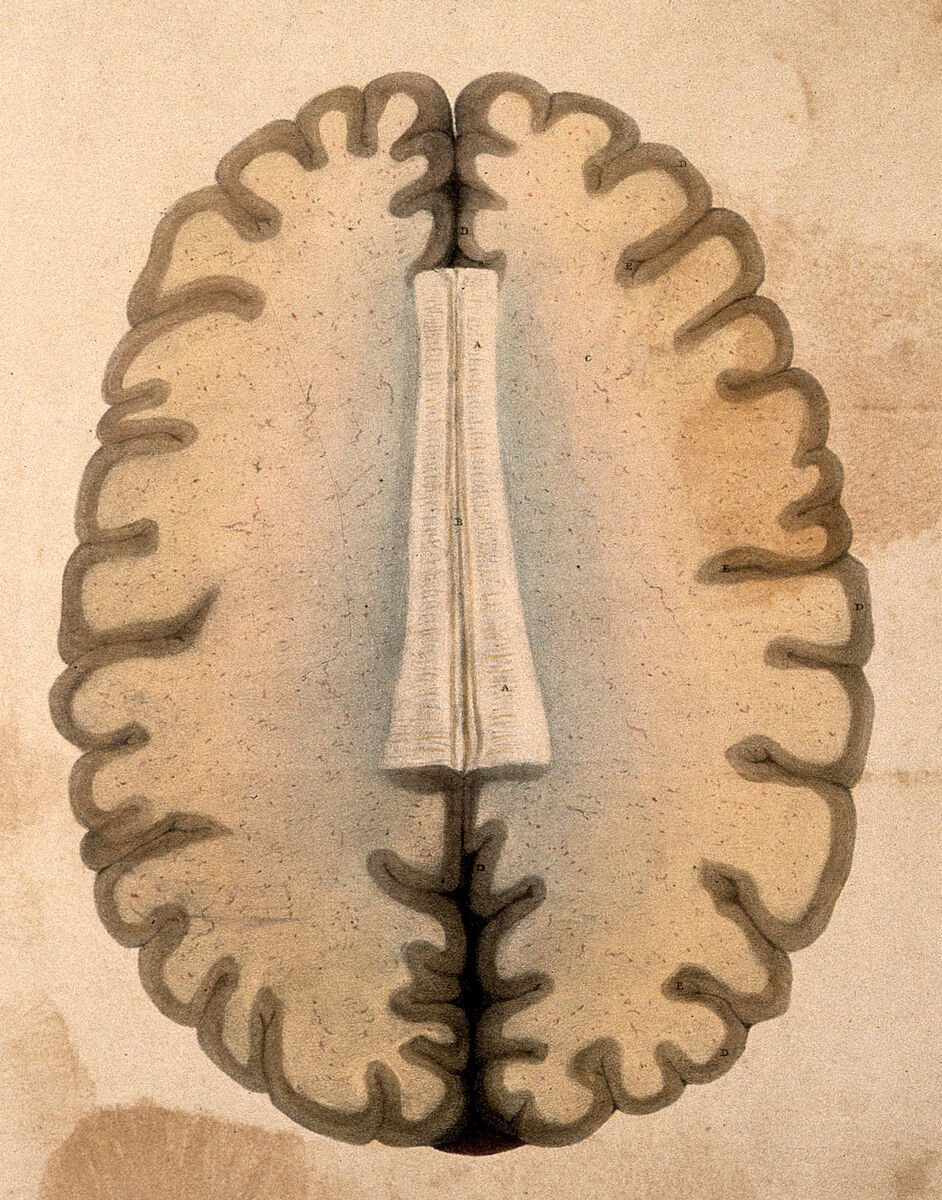
Some epilepsy patients had the corpus callosum, the bridge between the two halves of the brain, cut to stop their seizures. Roger Sperry and Michael Gazzaniga found that the two halves could then know different things. Show a picture only to the right hemisphere, which in most people can't talk, and the left hemisphere, which does the talking, will say it saw nothing, while the left hand points straight at the matching object. Then give the right hemisphere a written instruction to walk, and the patient stands up. Ask why, and the left hemisphere doesn't say it doesn't know. It makes up a reason, something like "I wanted a drink," and believes it (Gazzaniga, 2000).
Gazzaniga called that part of the brain the interpreter, and his argument is that it isn't a quirk of surgery patients. Everyone has one. It watches what you do and writes a confident explanation after the fact. The reasons you give for your life might be a spokesman covering for machinery it can't see.
So the present is assembled late, the past gets rewritten every time you visit it, and the reasons are partly made up afterward. The solid "me" behind the eyes starts to look like the most convincing thing the brain produces.
II. And you never were
The self you're carrying around is also newer than it feels. In 1976 a Princeton psychologist named Julian Jaynes published The Origin of Consciousness in the Breakdown of the Bicameral Mind and argued that as recently as three thousand years ago, people didn't experience their own thoughts as their own. The brain solved problems, but the answer arrived as a voice that seemed to come from outside, and people obeyed it as the voice of a god. His evidence was literary. In the oldest texts, nobody reflects or second-guesses. Gods tell people what to do and they do it. Then, around the middle of the first millennium BC, the writing changes, and people start doubting and arguing with themselves. Jaynes read that as consciousness switching on, the gods going quiet and turning into the inner voice.
Hardly anyone thinks he was literally right. I still love the idea, partly because something real did shift in that window. The philosopher Karl Jaspers called it the Axial Age, roughly 800 to 200 BC. Confucius and Laozi in China, the Buddha in India, the Hebrew prophets and the Greek philosophers all landed, mostly independently, on the same unusual idea: you should treat everyone well, not just your own people. Nobody agrees on why. Candidates include the chaos of the Iron Age, the first coins throwing strangers into constant trade (David Graeber makes that case in Debt), and growing cities, writing and surplus. Whatever the cause, the reflective, self-watching inner life we take for granted looks like it got built during this period rather than coming standard with the species.
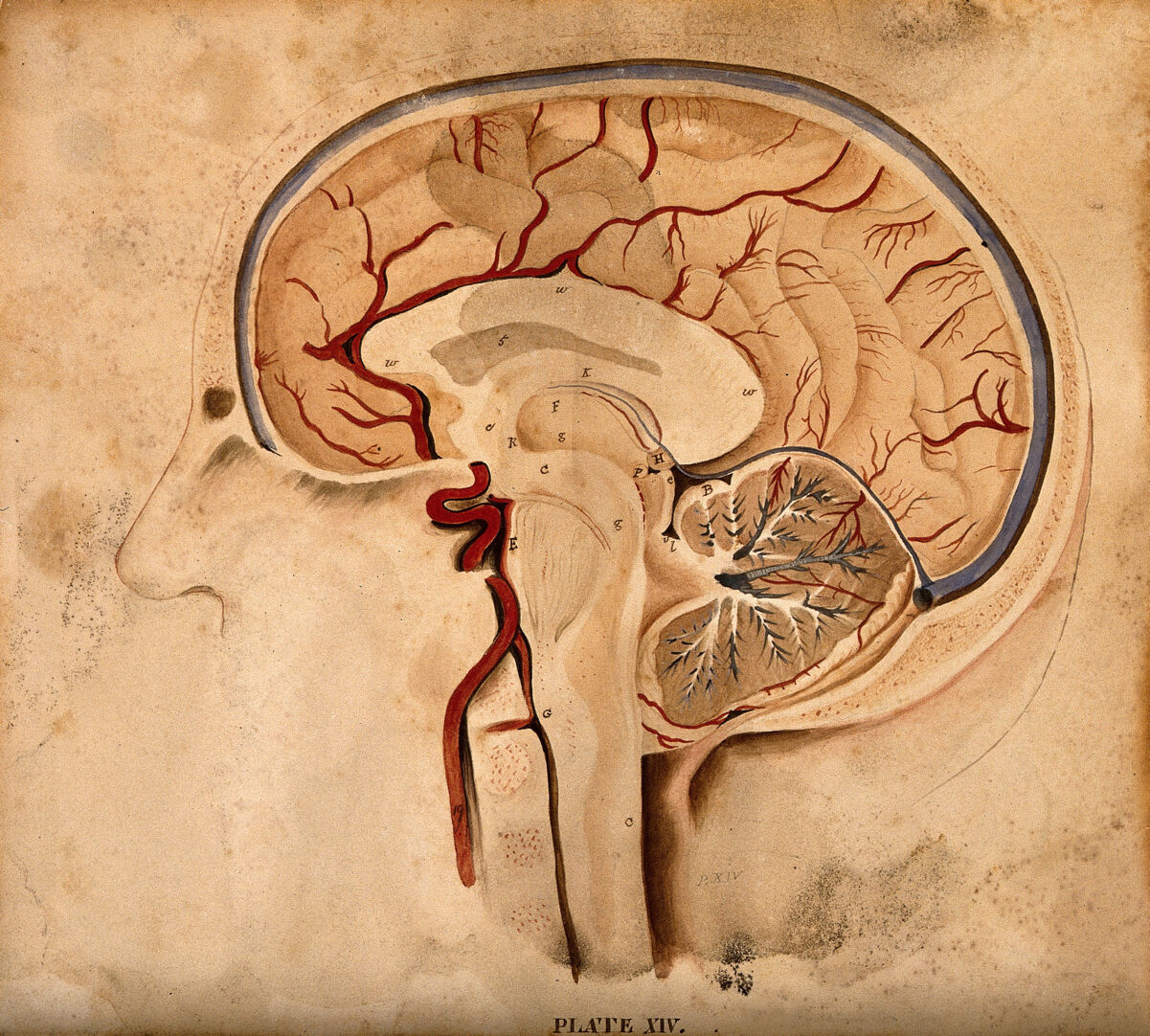
Monotheism helped build it. A single god who sees everything, including your thoughts, turned out to be a powerful social tool. The psychologist Ara Norenzayan calls these Big Gods and argues they let large groups of strangers trust one another, because everyone believed someone was always watching (Norenzayan, 2013). Think about what that does to people over a few generations. If God can see your thoughts, then your thoughts carry moral weight. You start watching yourself from the outside, because you've taken the watcher in. Private conscience and guilt when nobody's around existed before, but a god inside the skull turned them way up. We built the surveillance camera, then internalized it, and called what was left me.
III. So where did the voice come from?
If the inner watcher was taken in from outside, the next question is what it was taken in from.
Other people, out loud, first.
Lev Vygotsky, a Soviet psychologist, worked this out in the 1930s by watching children. Give a toddler a hard puzzle and they'll talk themselves through it out loud: no, turn it, there it goes, good job. He called it private speech. It doesn't disappear as kids get older. It gets quieter, then becomes a mutter, then just lips moving, then nothing you can hear at all. That last stage is the inner monologue you're running right now, reading this. For Vygotsky, thinking is a conversation that moved indoors (Vygotsky, 1934).

I'd seen this and never known it had a name. There are all these videos of little kids skiing or mountain biking and narrating the whole way down: good job, you did it, you got it. I always wondered why kids do that and adults don't. This is why. And listen to what they're saying. A six-year-old didn't come up with "good job, you got it" on their own. That's a parent's voice coming out of the kid's mouth, now pointed at themselves. You're watching it move inside while it's still audible. In a few years it'll go quiet and become the little private nod you give yourself when you land something.
Which means what gets said to a kid matters a lot. A kid who hears "you can do it" grows a different narrator than a kid who hears "what is wrong with you." Same process, different cargo. The voice you run your life on is, in a real way, the voice that was aimed at you before you could pick.
Earth to Tom.
IV. Which is why it hurts, and why we sing
This is what I worked out with a mop in my hand.
You are not a single self. You are a chorus. You're put together out of everyone who got close enough to be taken in: parents, teachers, the friend whose laugh you can still hear, the person who said one thing that changed how you saw yourself. Each of them left something behind, a phrase or a tone of voice or a way of looking at things, and it didn't stay filed as a memory. It became part of how you think. It was never just you in there.
That's why losing someone is so hard. If the people who matter to you live in your head as voices, as part of the equipment you think with, then when one of them dies they don't fully leave. They keep talking. But you can't update them anymore. You're left with a working piece of someone who's gone, and you know it's the last version you'll get. It's why people hear themselves "sounding just like my mother" and stop for a second. It isn't a figure of speech. It's her, surfacing. You really are made of the people you've loved, which is a comfort and also the wound.
There's a clock on all this, too. How long your life feels depends less on hours than on how much your brain bothered to record. Eagleman tested this by having volunteers free-fall backward off a tall tower into a net. Time didn't actually slow down for them during the fall, but their brains recorded so much detail that it felt slow afterward. That's also why summers felt endless when you were a kid and whole years disappear now. Everything was new then, so you recorded everything. Now a lot of days are routine, and the brain stops taking notes. The years blur because you stopped writing them down. The useful part is that new places, new people and paying real attention make your life feel longer from the inside.
There is a way out of the skull, though, and it's physical. Scientists can scan two brains at once while people talk, which is called hyperscanning. When a conversation really works, the two people's brain activity starts to line up, rising and falling together, and the more it lines up, the better the listener understands (Stephens, Silbert & Hasson, 2010). Being in the same room isn't enough. Two strangers ignoring each other don't sync. Two people locked into a good conversation do, even over video. When a good storyteller talks, the pattern in their brain shows up in the listeners' brains a moment later.

Bodies do it too. When a choir sings, the singers' heart rates start moving together (Vickhoff et al., 2013). You may have heard this one and gotten it slightly wrong, because I did. Their hearts don't beat at the same pulse, which would be impossible across different bodies and ages. What lines up is the speeding up and slowing down. Your heart naturally speeds up a little when you breathe in and slows when you breathe out. Singing makes everyone breathe in the same places, so every heart in the room speeds up and slows down on the same schedule while keeping its own pace. The music sets the breathing, and the breathing sets the hearts. No magic required, and I like it better that way, because you can feel it working.
It probably helped us survive. A group that could fall into rhythm, moving and breathing and feeling together, held together better than one that couldn't. So we're built to lock onto each other without trying, and the good feeling you get singing with people, or in a conversation that takes off, is how evolution gets us to keep doing it.
So that's the shape of it, the thing I found under the floor I was cleaning. For three sections the news is that you're alone: the present is assembled, the past is edited, the reasons are made up afterward, and nobody else will ever get inside your skull. All true. But you were never alone in there to begin with. We're built out of each other, one voice at a time, starting before we had any say. And a lot of what people have done together, from sitting around the first fires to singing in choirs, is reaching across that gap and, for a little while, physically falling into step.
That's not all I remember from being a kid, by the way. Not even close. I had parents who loved me hard and taught me most of what I'm proud of. Both of them, at different times, told me they loved me and my brother "equal but different." I don't remember either conversation well, but the phrase never left. Their voices are in my head too, more of them and warmer, and they do far more of the daily work than Miss Leonard ever will. That's what's strange about it. Out of all that love and patience, years of it, the line that pops up on its own, the one I've replayed until it's smooth, is a nasally Earth to Tom from a woman having a bad morning. The good stuff gets in. It's just quieter.
Miss Leonard was snide, she was wrong about me, and she's been in my head for thirty-four years anyway. At least that's how I remember it, which, given everything above, means the details are probably off. I've replayed that sentence so many times that the sneer might be mine by now, not hers. It doesn't really matter whether she was that mean. The version I built is the one that's been living with me and doing the work this whole time. We aren't haunted by people. We're haunted by the recordings we made of them.
You don't get to choose which voices get in. The careless ones get in as deep as the loving ones, sometimes deeper. Knowing that gives you a little power, though. If an annoyed woman can echo in me for thirty-four years without ever meaning to, imagine what you could put in someone on purpose.
Earth to Tom.
Story and words by Tom Lucido. I figured most of this out by talking it through with Claude, out loud, while deep-cleaning my house.