Here's the whole business model. I make a card. I give it to a shop I love. The shop sells it for five dollars and keeps all five. I never see a cent, and I never find out who bought it.
That's the model. There is no second page.
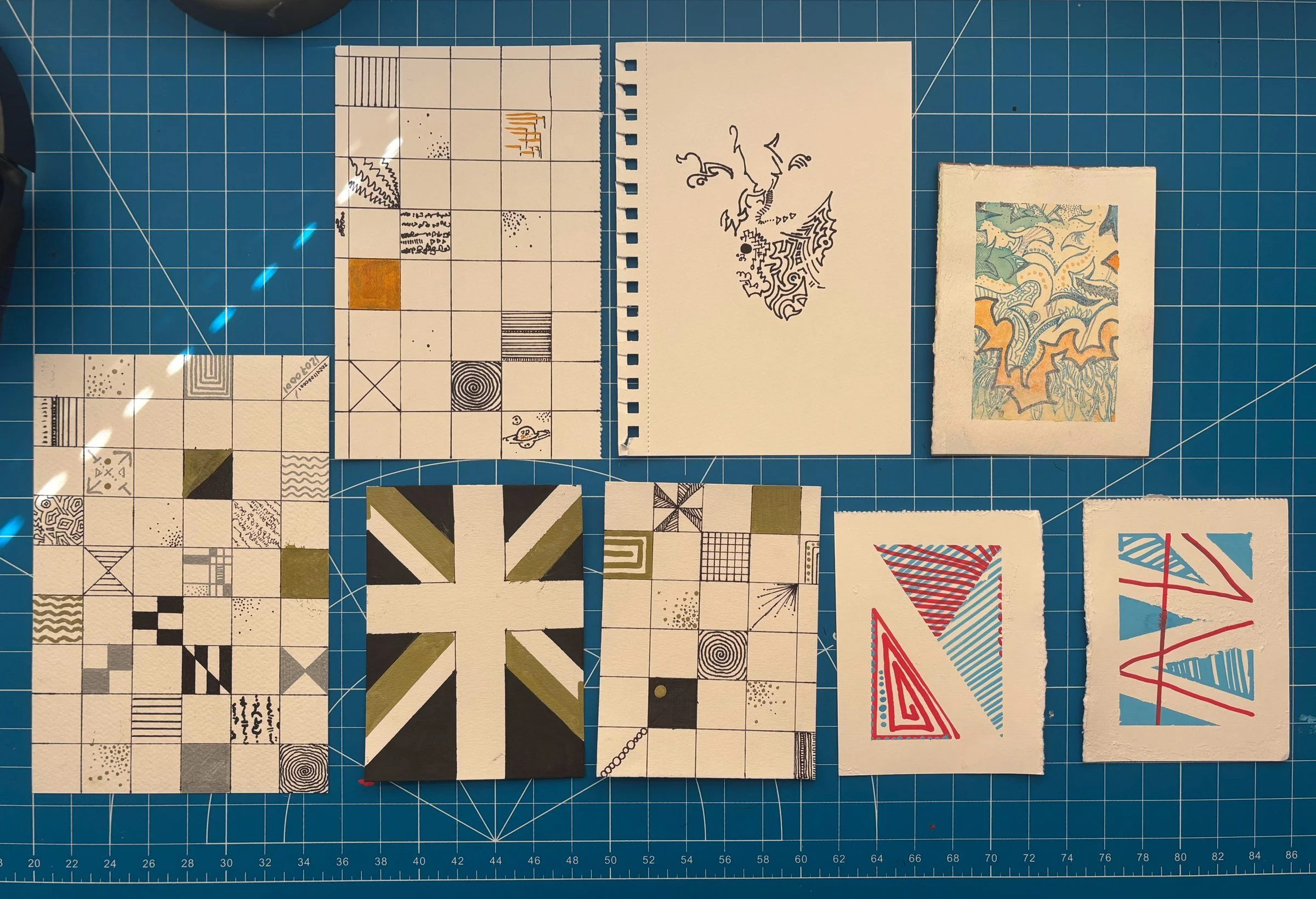
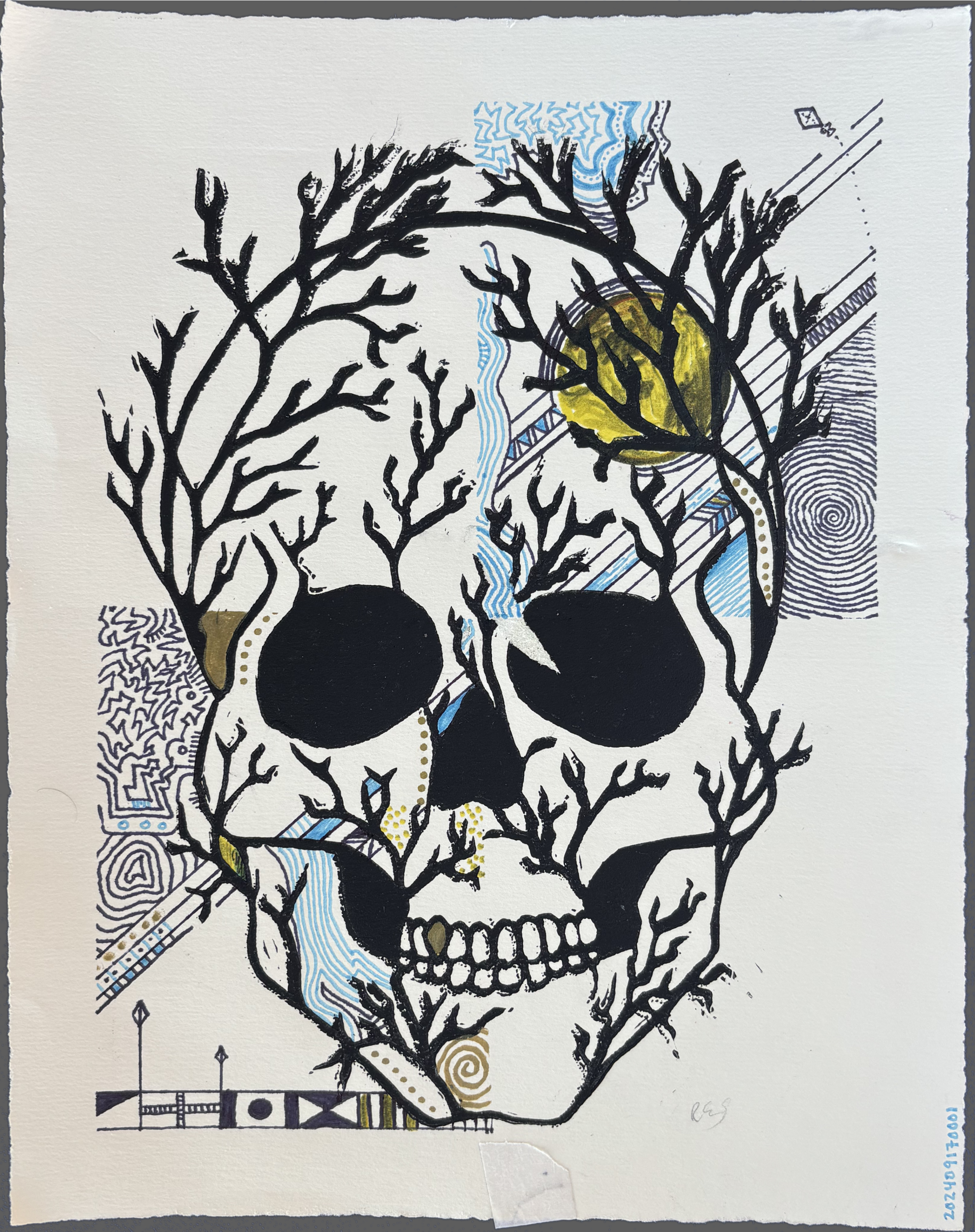
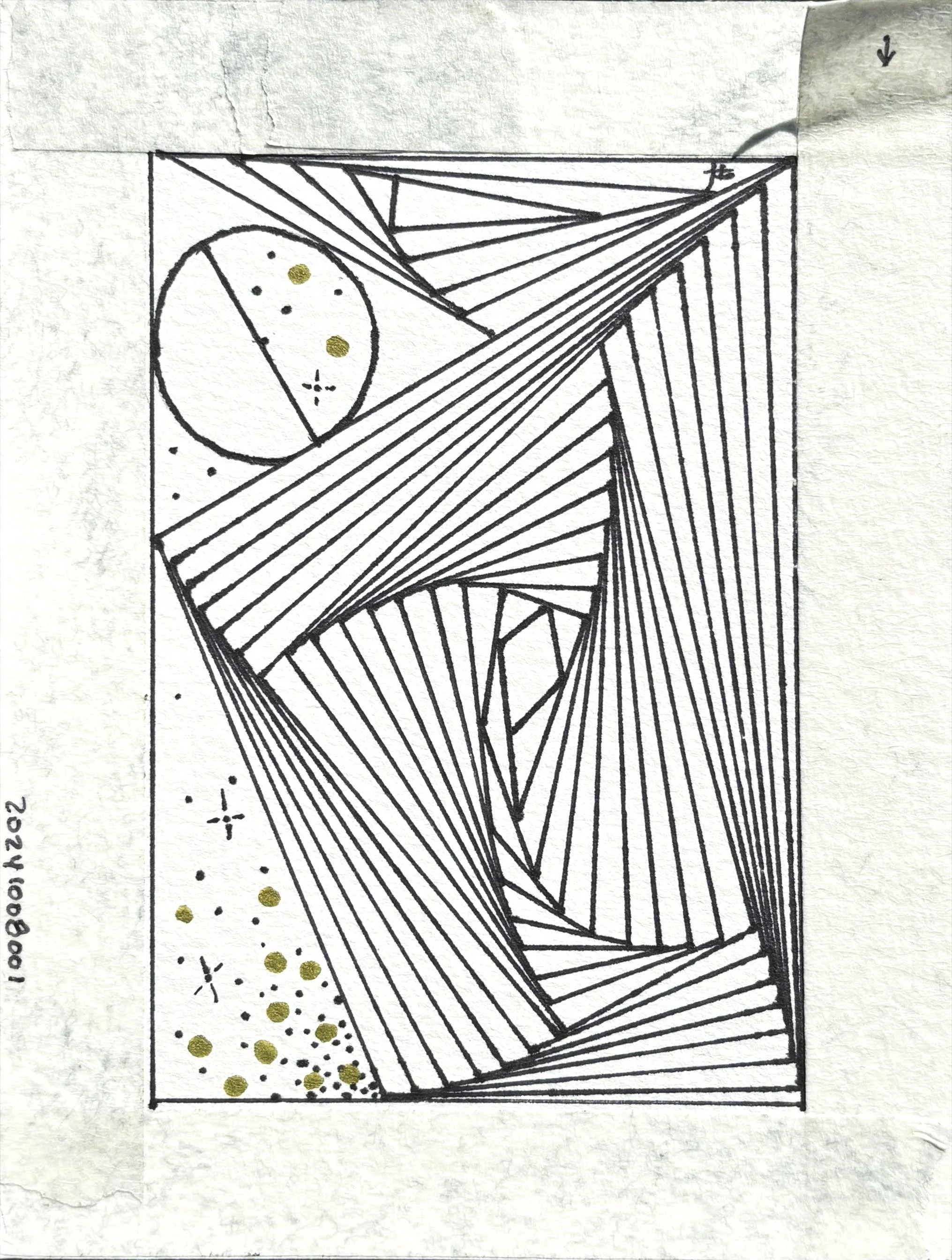
Analog Arrivals is mail art: ink, collage, colored pencil, and whatever else is within reach. Some pieces are postcards that can survive the mail. Some are objects that should live on a shelf. Every one is a one-of-one.
I was talked, briefly, toward printing a base and hand-finishing on top of it. Faster, more sensible, the kind of plan a spreadsheet would love. I said no. I want to be intentional and make things the way that works for me. With outcome.
The outcome is two hundred cards in about six months.
How they get made
I don't make one card at a time. I work on five, six, sometimes seven at once, moving between them whenever one stops being interesting and another one starts. A card sits half-finished while its neighbor gets another layer. Then I come back to it. I'm never sure one is done until it feels done, which is less a system than a mood with a table under it.
Monday nights are the Analog Arrivals block. On a good night, five to ten cards move forward. That's twenty to forty a month, which puts two hundred somewhere between five and ten months out. Six holds if I hit the high end or steal a second night. (Yes, I did the math before I made a single new card. Some habits don't clock out.)
"New" matters there. By my own loose count I've made somewhere between four hundred and eight hundred cards over the years, which is a range, not an inventory. None of those go in the stacks. Only new ones count.
The rules for the shops
The shops have to be independent. Mom-and-pop. No private equity, no chains, nobody who sold out. Somewhere in Grosse Pointe Park or Detroit, and very, very cool.
Each shop gets a stack. Every piece sells for five dollars. The five dollars is theirs, all of it, every time. They can keep one card for themselves.
Why give away the money? Because the difference between consignment and support is who keeps the five dollars. Consignment is a transaction with paperwork. This is closer to a tip jar that happens to be made of paper.
How they take the money is their call. Cash, card, Venmo, an IOU from a regular. I'm not involved, and that's the point. You walk in, pick one up, pay, and leave. I don't get your email. I don't get your name. The card doesn't know who you are, and neither do I.
Where the trail ends
The back of every card gets a stamp that says Analog Arrivals. It points to analogarrivals.com, and that's the end of the trail. No numbers, no edition marks, no QR code, nothing hidden in the glue.
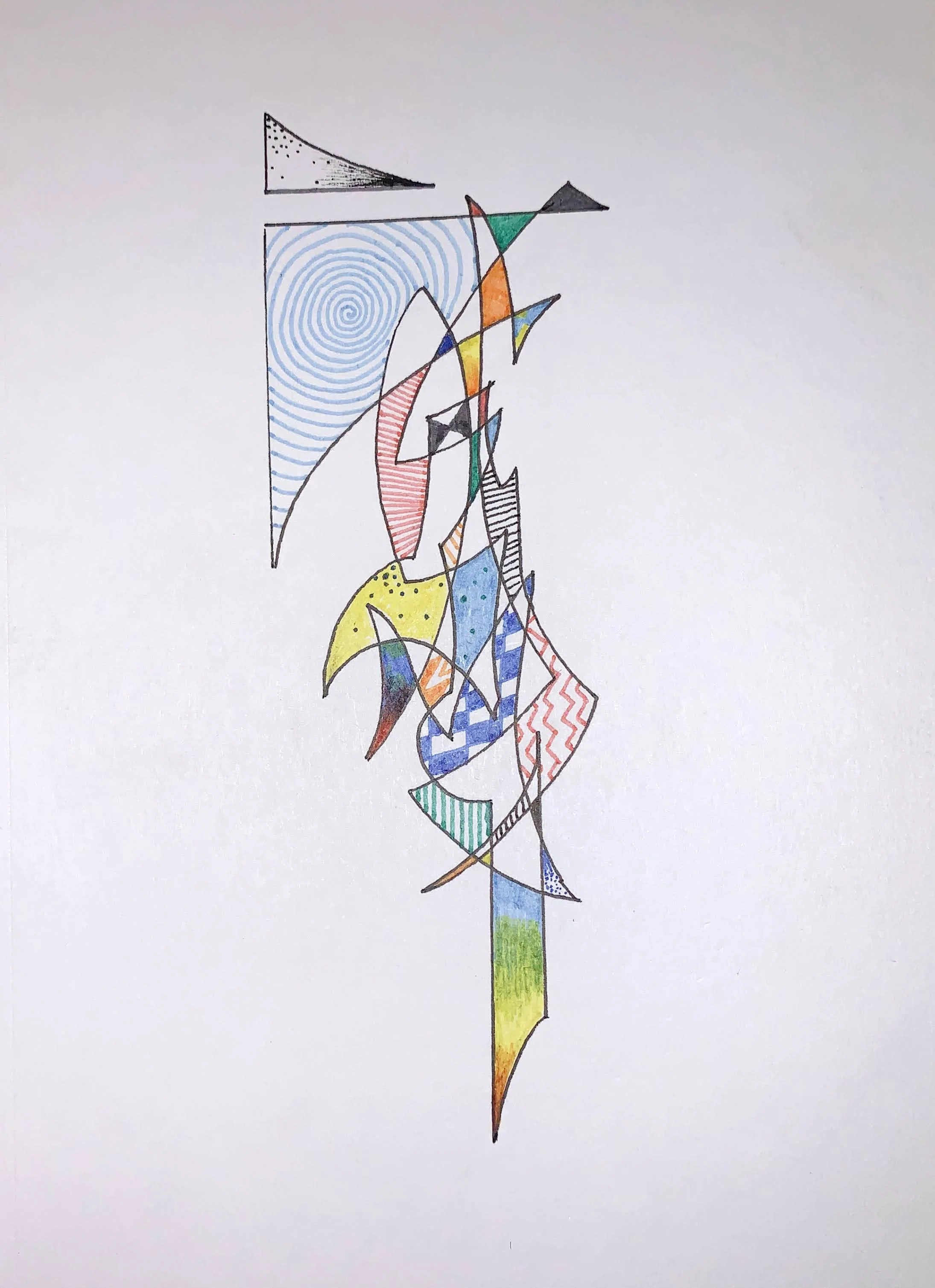
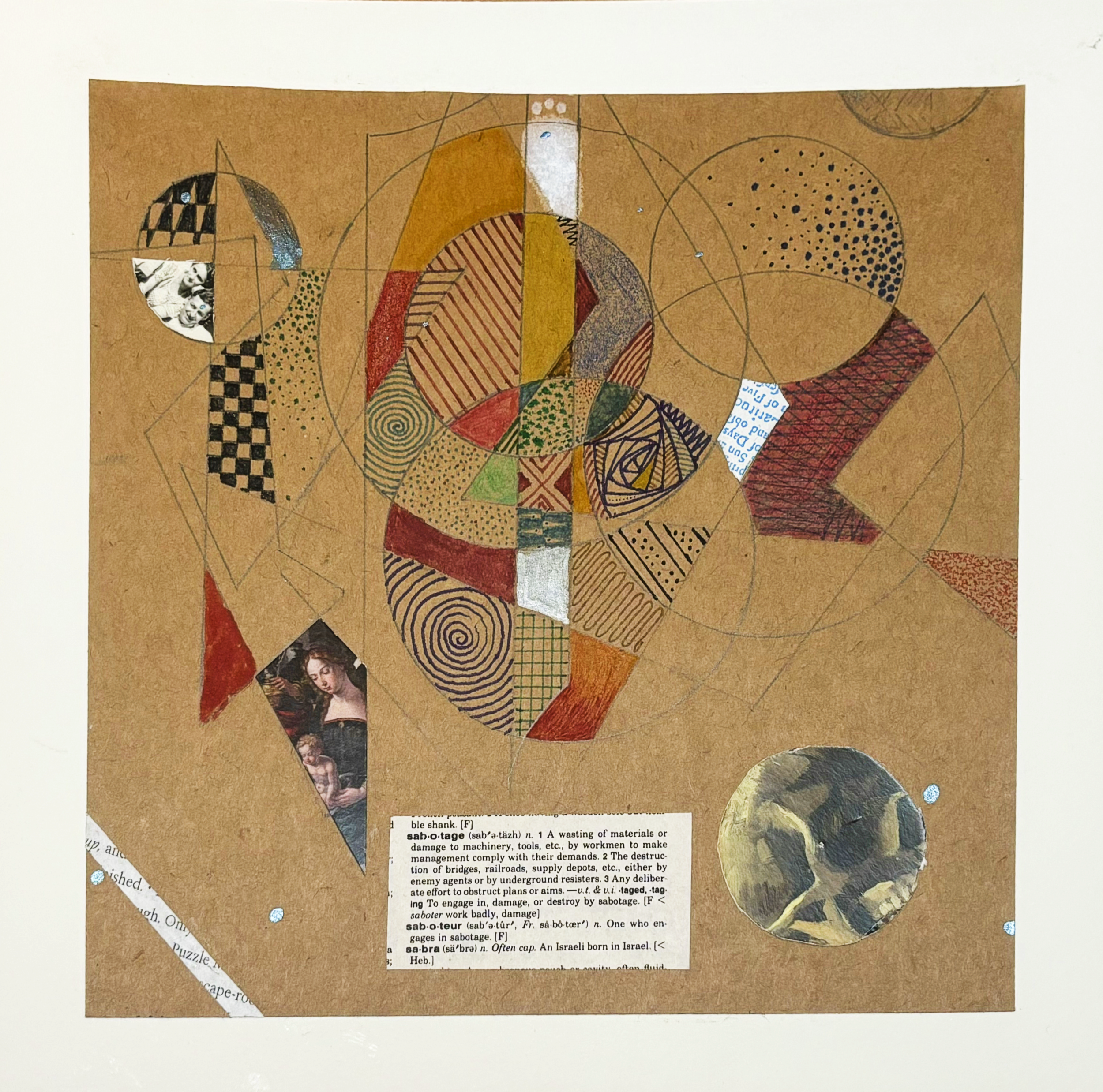
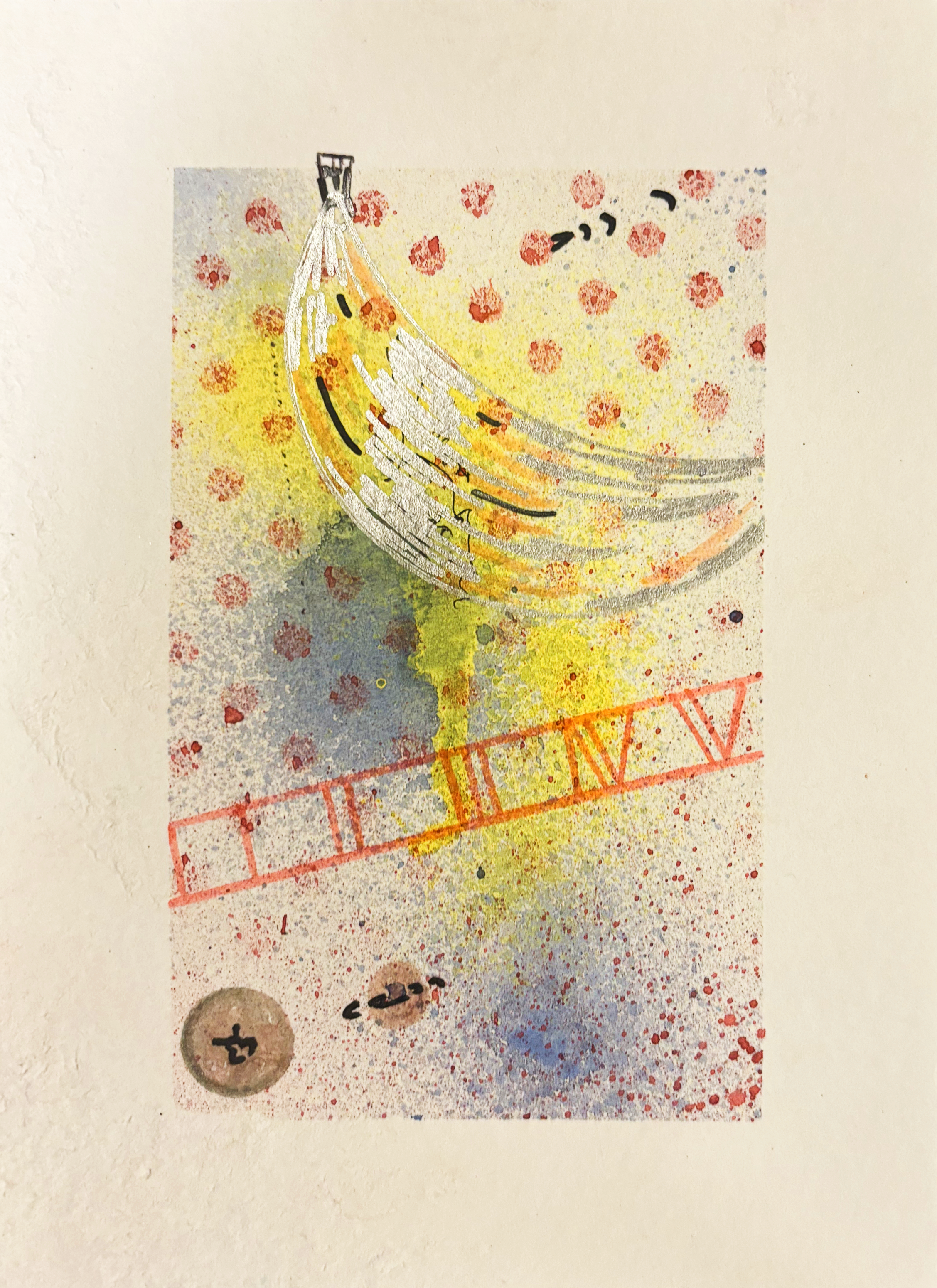
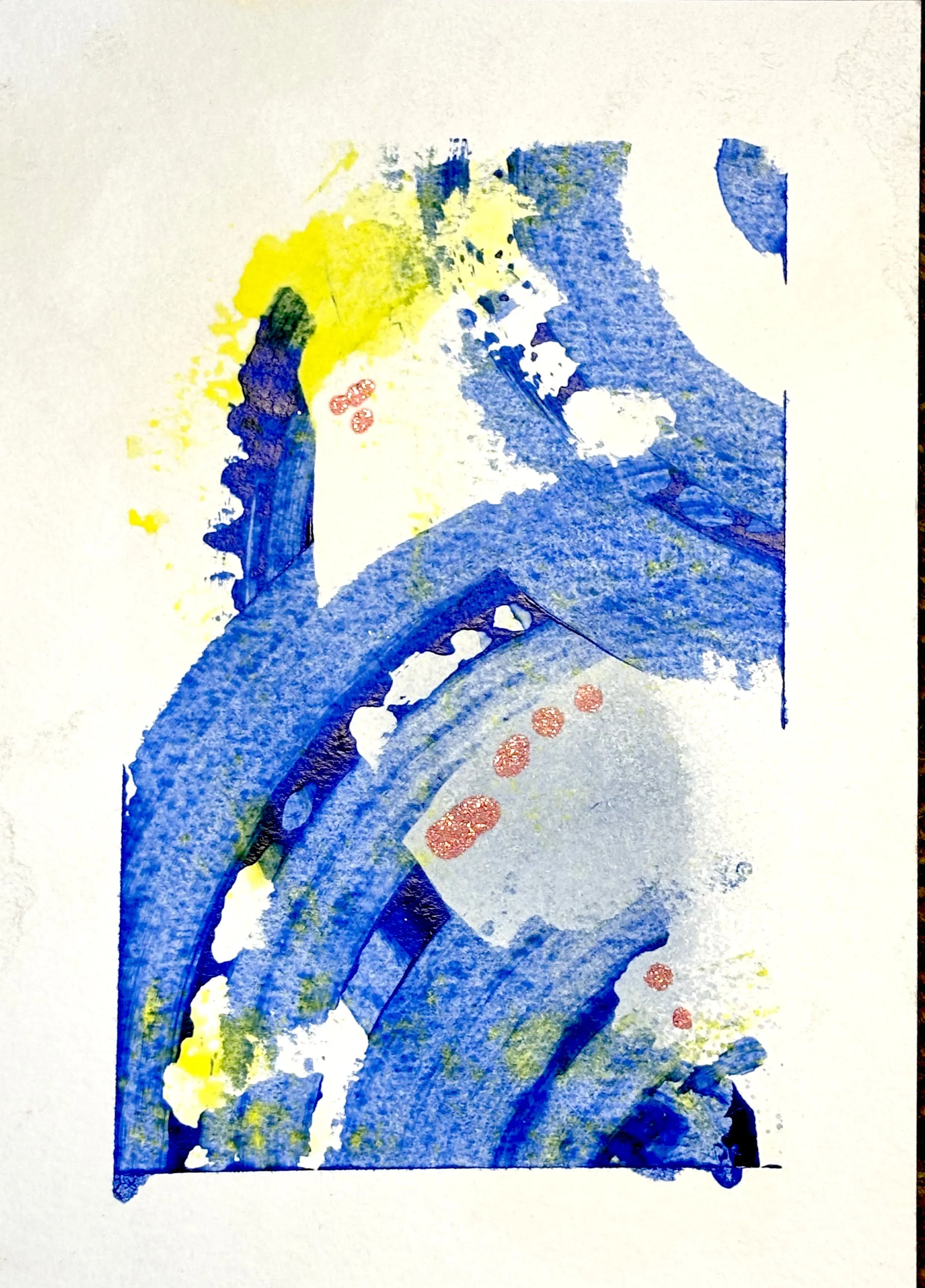
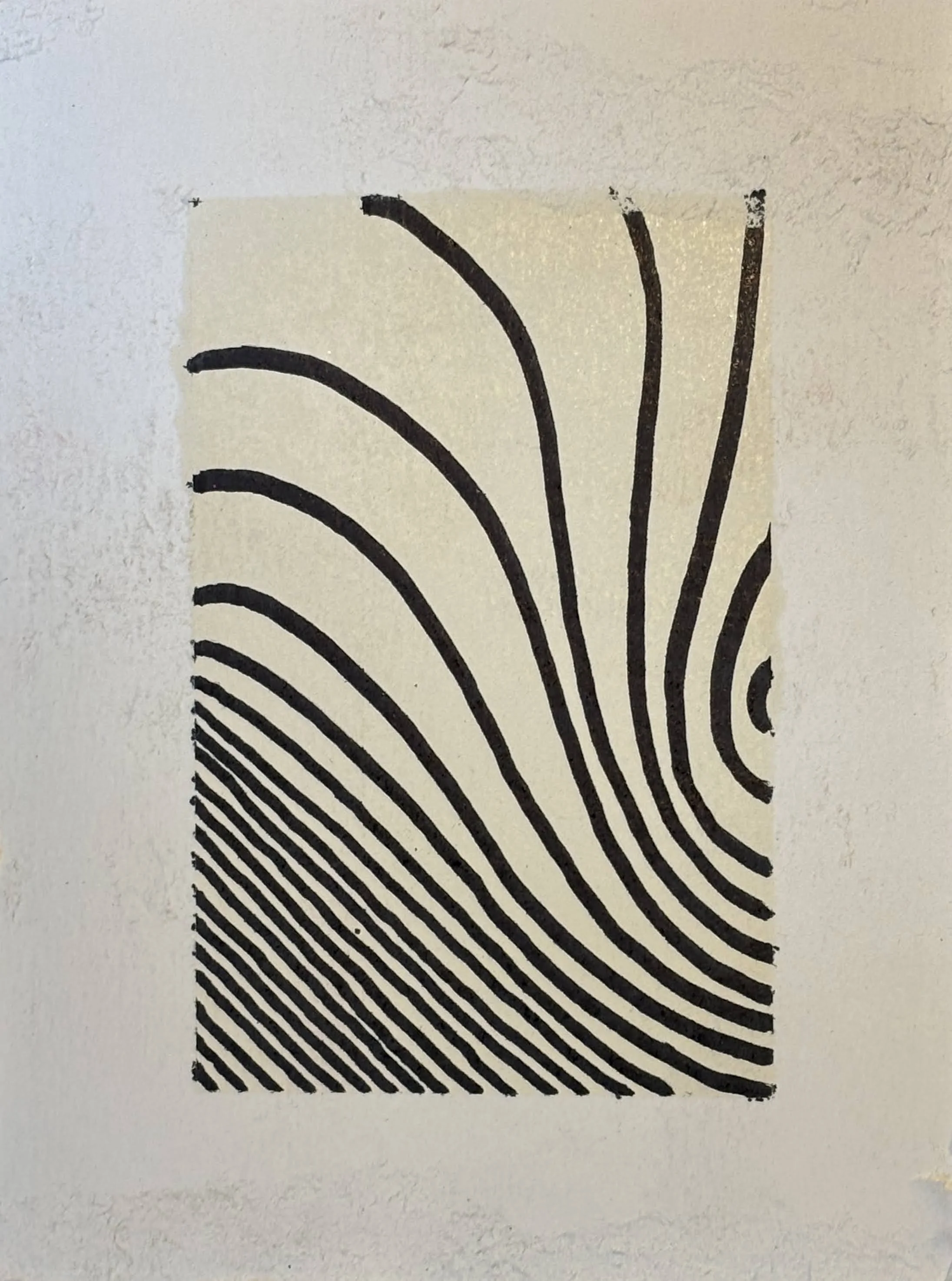
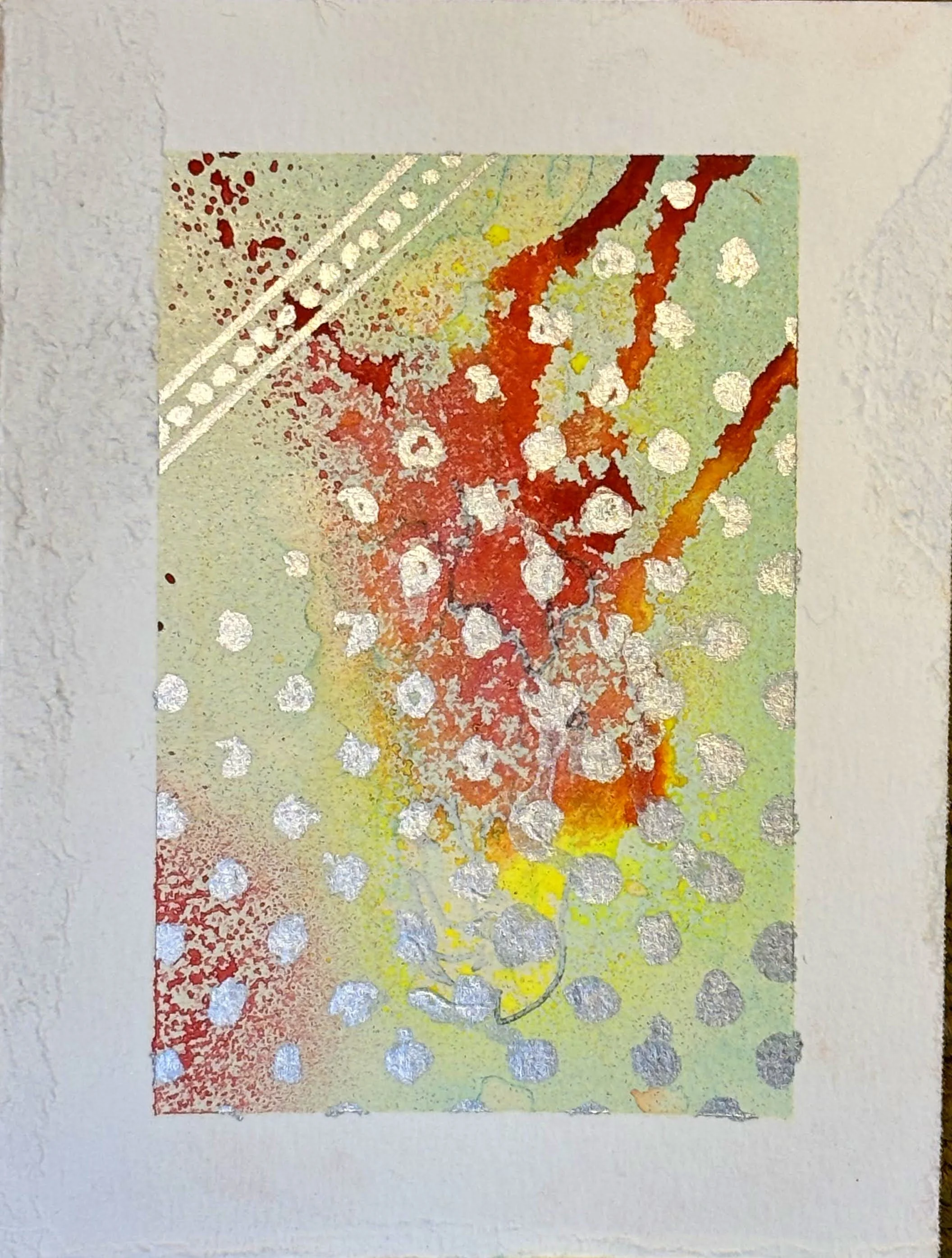
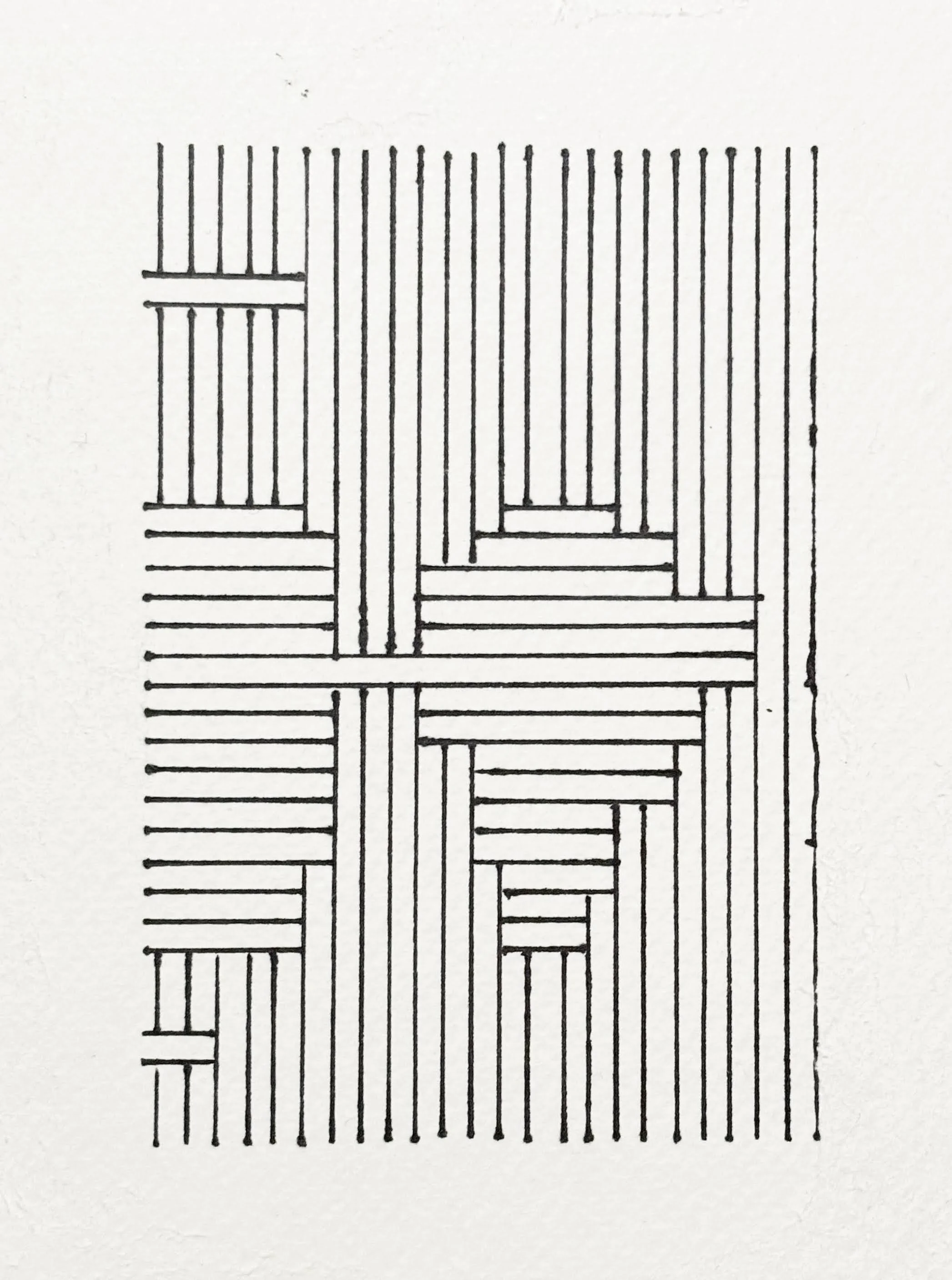
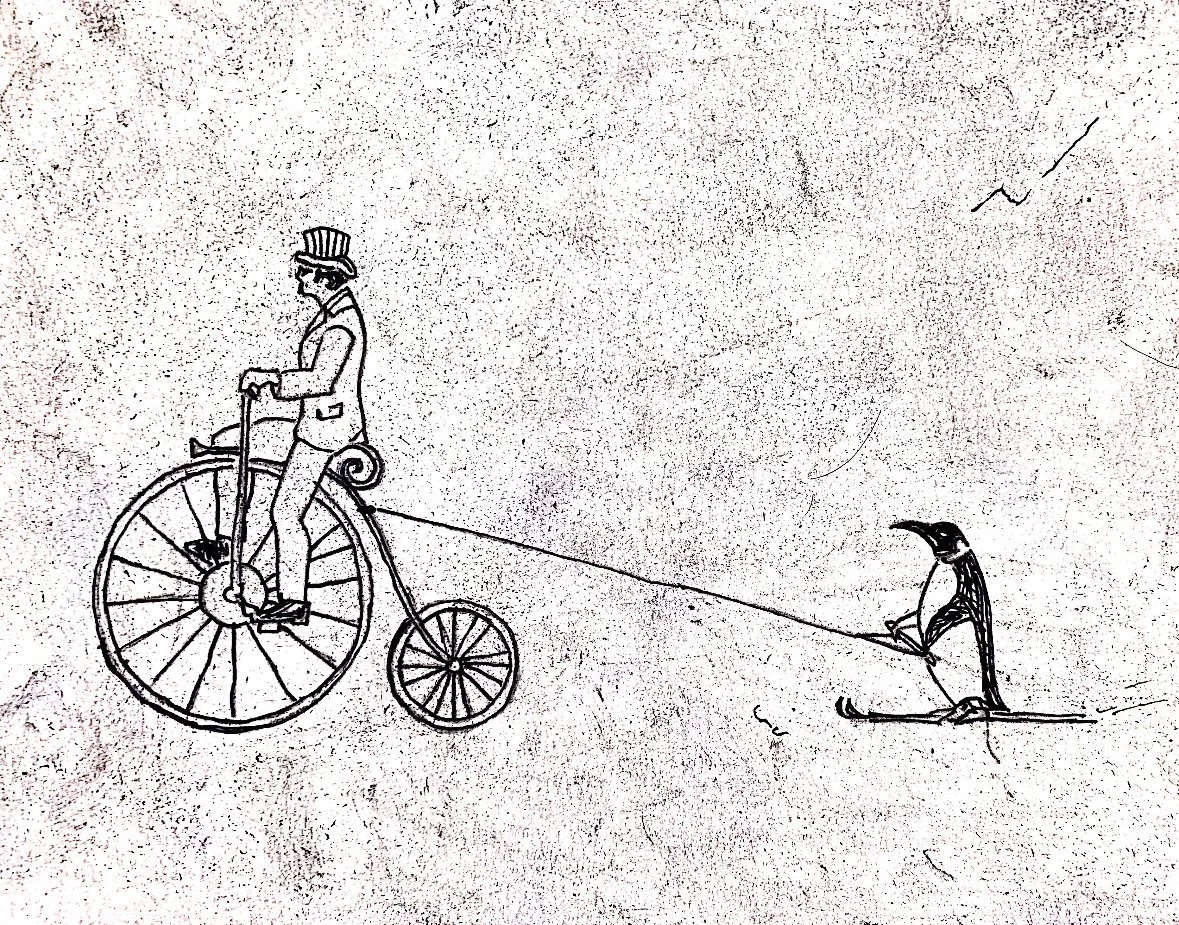
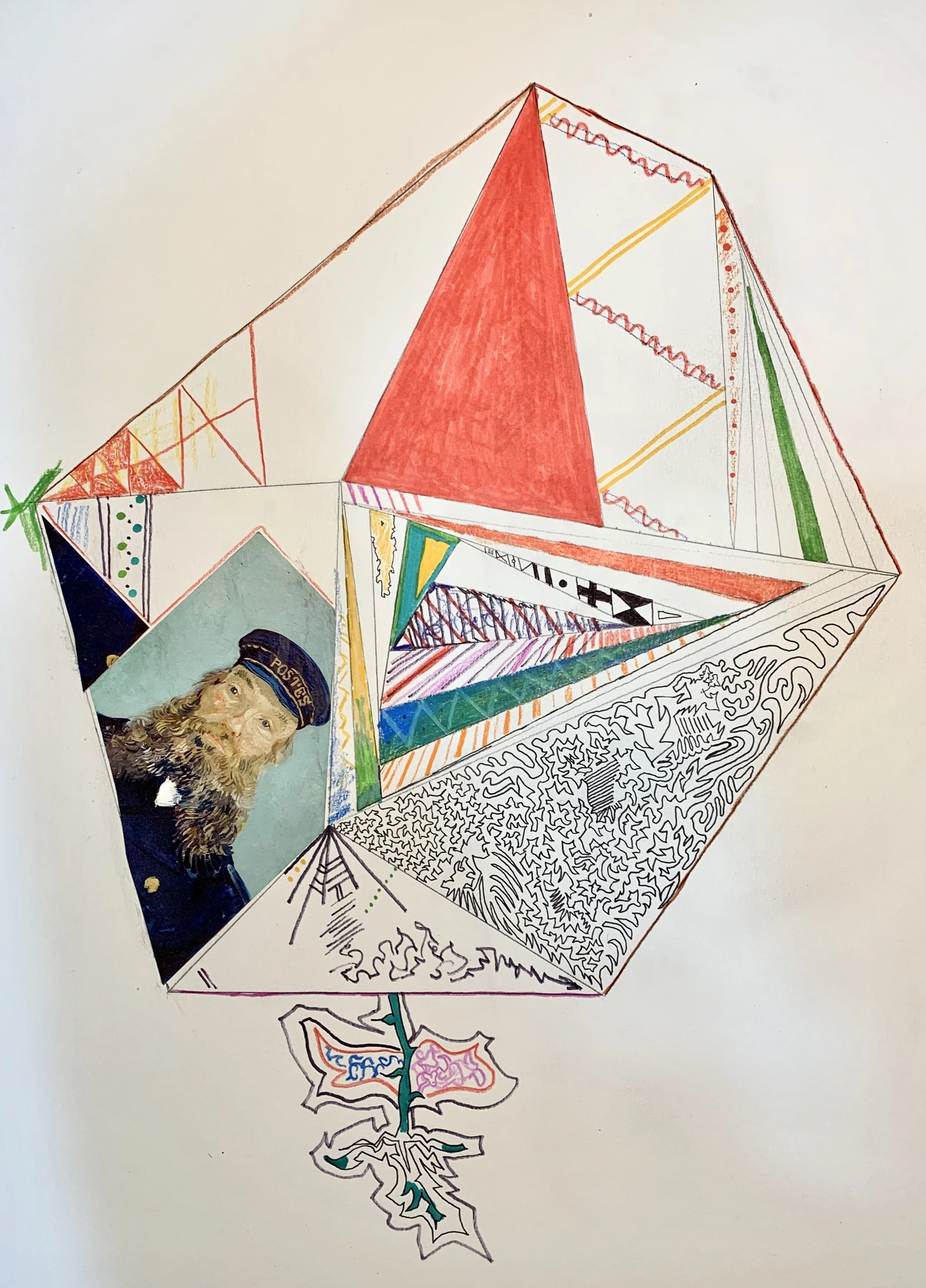
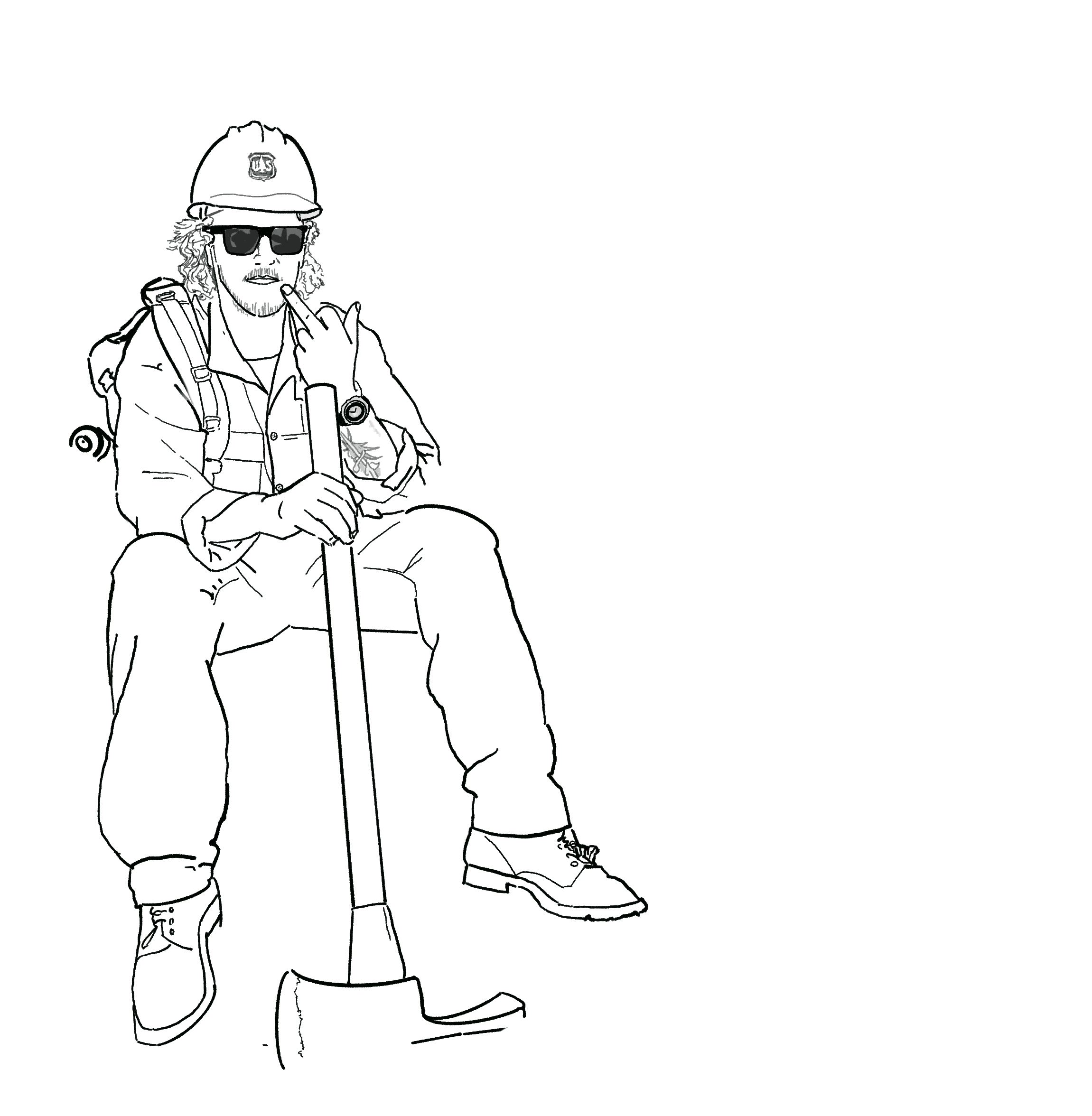
Mail art has a patron saint, by the way. Ray Johnson spent decades running what came to be called the New York Correspondence School out of his mailbox: collages sent to friends and strangers, often with a note asking them to add to it and send it on. If you've heard of him, you're either an art-history person or you've seen How to Draw a Bunny. If you haven't, now you have.
In 2000, Americans sent about 103 billion pieces of First-Class Mail. Last year it was about 42 billion, and it has dropped every single year I checked.
I'm not going to fix that with two hundred postcards. I'm aware. I'm not calling this a movement, either. It's a stack of cards on a counter with a price on a sticky note. But somewhere on the east side, somebody waiting on a coffee is going to pick one up, turn it over, read a stamp that tells them almost nothing, and pay five dollars for the privilege. Then maybe they mail it to somebody. That's the whole loop: make it, give it away, see who shows up, see what worked.
The part that isn't mysterious
The cards stay quiet on purpose. This blog doesn't. Every drop gets a post here: where the stack went, what happened next, and the first time a shop owner texts to say they're out.
The first stack goes out when there's a stack. I have no idea what happens after that. I'll write it down when it does.